
Electricity Band A: ₦209.50/kWh Doesn't Mean 20 Hours of Light
Moved to Band A in Lagos? The 20 hours is a weekly average, a downgrade isn't instant, and ₦20,000 buys about 95 units against Band B's 294. Here's what's true.
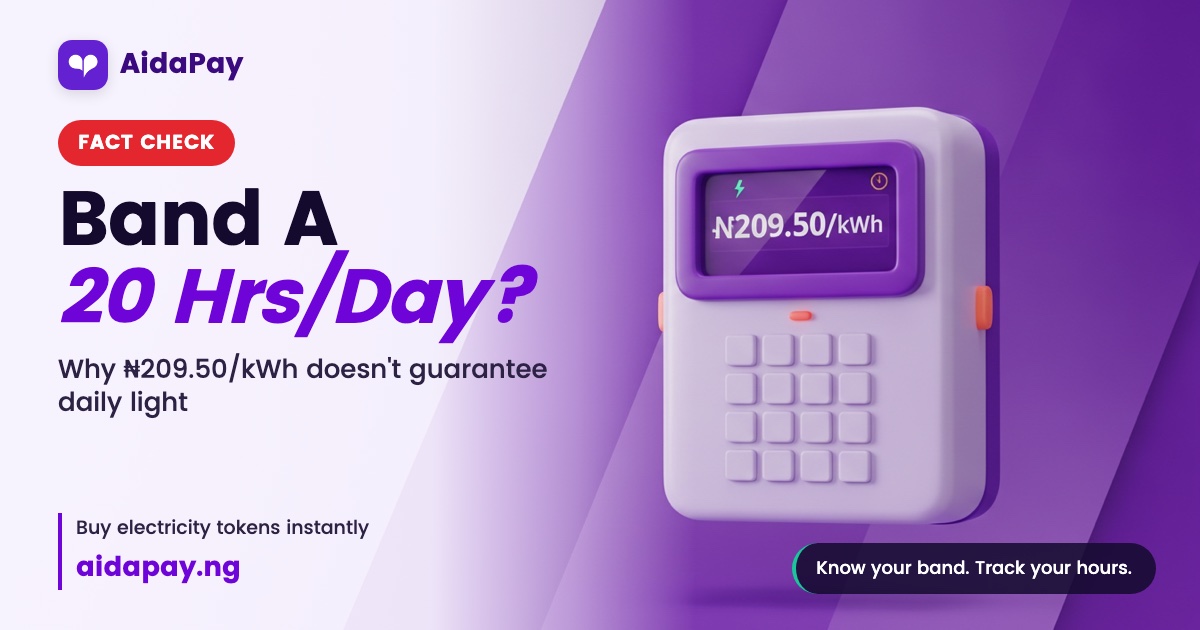
Being on electricity Band A doesn't mean your DisCo owes you 20 hours of light every single day. The rule sets a minimum average across a whole week, so one dark Tuesday doesn't break it. In Lagos, you pay ₦209.50 per kWh for that weekly promise.
Rates in this guide are as at 16 November 2026.
More than 450 Lagos feeders now sit in electricity Band A. Only about 50 did before. That puts over half of Lagos customers on the top rate for every unit they buy, and plenty of them have picked up at least one of the four beliefs below from a neighbour or the family WhatsApp group. None of them survives the actual rules.
“Electricity Band A means 20 hours of light every day”
That's a myth. Band A treats 20 hours a day as an average across one week, not a floor for each day. Your street could have a poor Tuesday and a full Saturday and still pass.
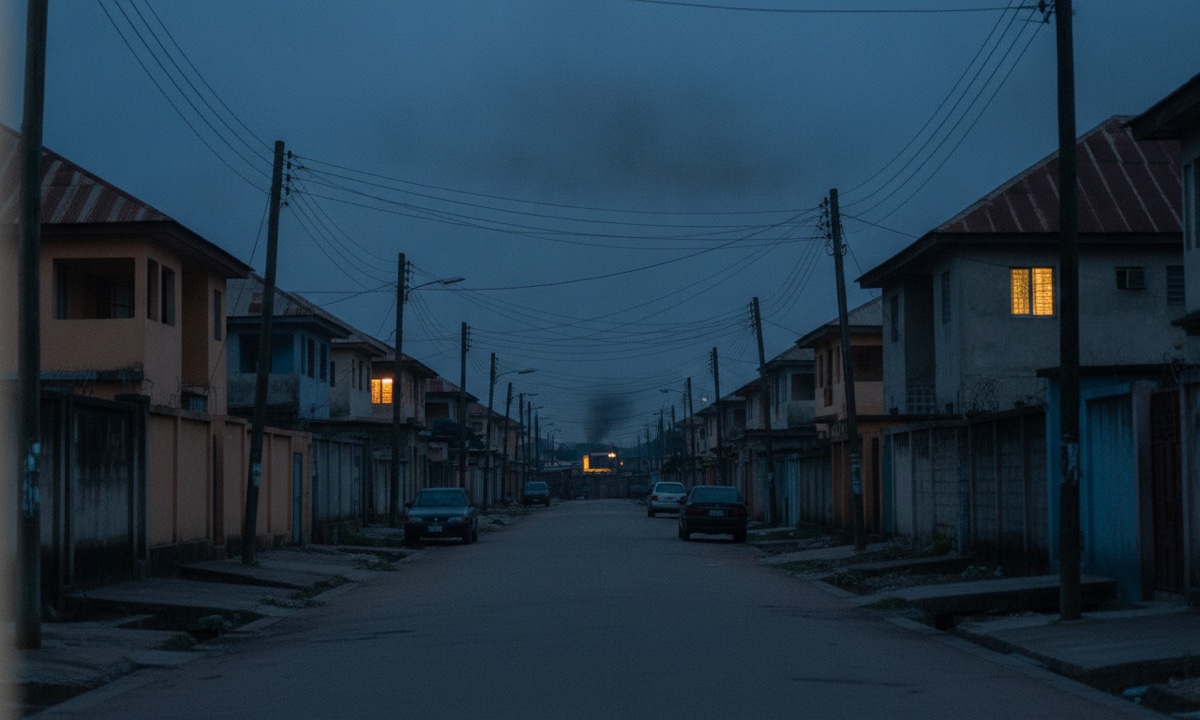
Your DisCo still has a duty when supply slips. If it misses the Band A level two days running, it has to post an explanation on its website by 10am the next day, with the reason and a timeline for bringing supply back.
Much of the darkness you sit in at home starts far from your DisCo. Some power plants never sent the electricity out. Average grid output sat around 3,550MW in November, lower than in August. Gas shortages at the plants and low water in the hydro dams cut supply further in early November, so less power reached your DisCo to share out, however many feeders it had marked as Band A.
Here's what caused Ikeja Electric's blackouts over the first two days of November.
| Cause of the interruption | Share |
|---|---|
| Load shedding to keep the grid stable, because generation was low | 68% |
| DisCo ignoring its load allocation, local faults or maintenance | 26% |
| Planned transmission maintenance and grid limits | 6% |
Load shedding and grid limits caused roughly three in four of those blackouts. So the trouble began outside the DisCo's own network. You still paid the Band A rate for every unit, which is why the next belief matters.
“If light drops, my DisCo must move me to Band B straight away”
No. A downgrade takes longer than that.
NERC's April 2024 order set the first trigger: a feeder that stayed below its committed level for seven days in a row dropped to the band its supply actually reached. Today NERC assesses DisCo performance over a 60-day period. The tariff changes only after NERC verifies that review, so a bad day or two won't move your feeder under either rule.
Complaints alone won't shift it either. A downgrade follows the supply your feeder recorded, not how loudly your street shouts. Watch for quiet switches too. Some feeders have changed band without anyone telling the households on them, and the band printed on an old receipt may already be wrong.
Checking your band takes a few minutes.
- Find your band or tariff class and the feeder name on your latest token receipt or bill. If the feeder name isn't there, ask your DisCo's customer care for it.
- Type the feeder name into the band checker to check which band your feeder is on.
- Compare the rate on your receipt with the Lagos Band A rate of ₦209.50 per kWh.
- If the rate matches but your area gets far less light, write that down for a complaint.
“Paying ₦209.50 a unit buys me better supply”
It doesn't. The higher rate pays for the promise of more hours. It adds no power to the grid.
Here's what one ₦20,000 token buys on each band, rounded and before any deductions on your receipt.
| Option | Price per kWh | What ₦20,000 gets you |
|---|---|---|
| Band A | ₦209.50 | about 95.5 kWh |
| Band B | ₦68 | about 294 kWh |
Band B gives you roughly three times the units for the same money. If you run a fridge, a few fans and a TV, you'll feel that gap within days, and more so on the nights when the generator has to come on anyway.
Paying top rate for a fraction of the promised hours feels unfair. Anger won't move a DisCo, though. Dated, written records of your supply will.
“Band A compensation lands on my meter by itself”
Only when NERC orders a specific payout.
The last one came in June 2026. It covered Band A customers whose feeders averaged under 18 hours a day across February and March. Prepaid customers got token credits, postpaid customers got bill adjustments, and DisCos couldn't use those credits to clear old debts. That scheme covered those two months only, and it has ended.
Nothing lands on your meter every month by itself. If you think your feeder fell short, run it through the electricity compensation checker to see where you stand.
Next, put the complaint in writing to your DisCo's customer care unit, get a reference number, and keep a copy of every message you send. When the DisCo doesn't fix it, take the complaint to your state regulator, which in Lagos is LASERC. Where a state has no regulator of its own, call NERC on 02013444331. The second line is 09088999244, and you can also visit a NERC Forum Office.
Tonight, find your band on your last receipt, and start the diary tomorrow morning. For every band explained side by side, read Nigeria's electricity tariff bands explained.
Frequently asked questions
Can I claim compensation for poor light on Band A?
Can I ask my DisCo to move me out of Band A?
What's the difference between Band A and Band B?
What does electricity band A actually mean?
How much is one unit of electricity on Band A?
How do I check which electricity band I'm on?
More like this.
 Electricity
Free Prepaid Meter: How to Get One Under NERC's ₦30bn Order
Unmetered on Band A or B? NERC's ₦30bn Tranche C pays for your meter. Here's when installs can start, what to do at each DisCo, an...
 Electricity
AEDC Token Not Loading? 6 Causes and the Fix for Each
Meter says Reject or Used? Work through six causes, from a mistyped digit to the KCT update, with the exact steps and AEDC contact...
 Electricity
Why Is There No Light in Lagos? Gas Gap, Not a Grid Collapse
Lagos is short of light because gas and water ran low and a 330kV line was vandalised. The grid didn't collapse, and Band A refund...